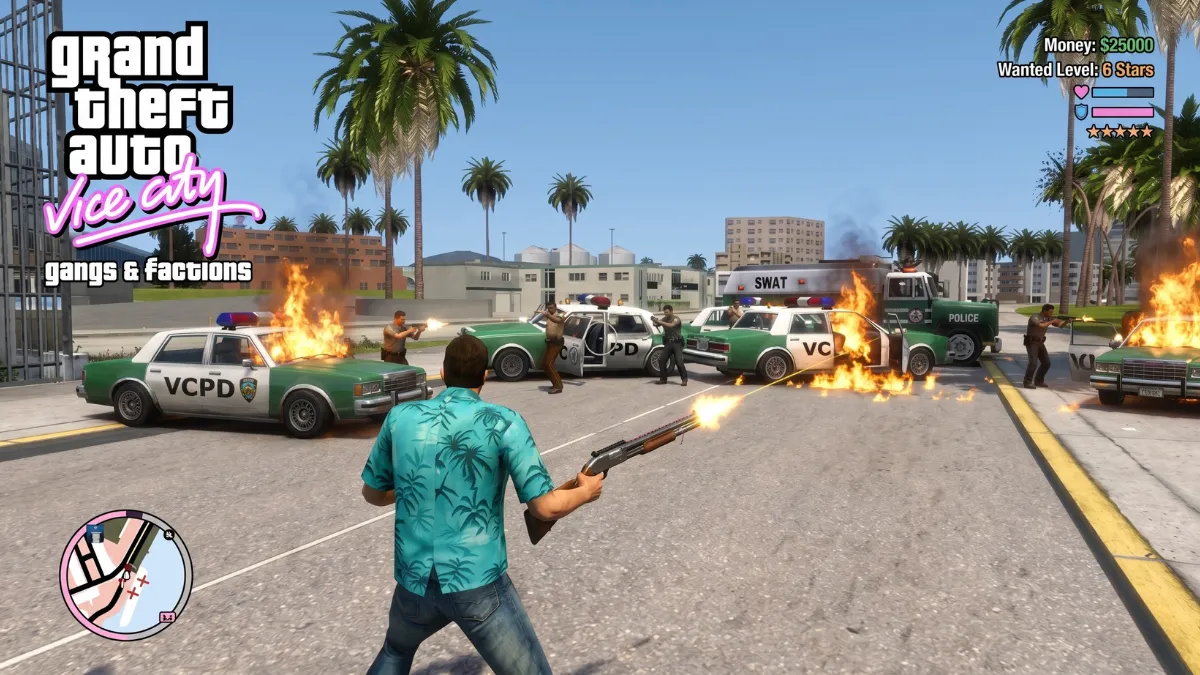
The criminal ecosystem of Grand Theft Auto: Vice City is built around scripted gang conflicts, shifting alliances, and mission-driven turf control rather than open sandbox territory takeover. Set in the neon-lit 1986 version of Miami, the entire power structure revolves around drug cartels, street gangs, and organized crime families competing for dominance.
Players often search topics like Gta vice city gang wars explained ps5, GTA Vice City gang names, and GTA vice city gangster name because these conflicts directly shape missions, story progression, and empire building throughout the game.
Cuban vs Haitian War: The Most Violent Street Conflict
One of the most iconic rivalries in Vice City is the brutal war between Cuban and Haitian gangs across Little Havana and Little Haiti.
The tension escalates after corporate manipulation by real estate interests, leading to staged conflicts that destabilize the entire region. Tommy Vercetti becomes indirectly involved in both sides of the war through mission chains that shift control of drug routes and factories.
The Cuban faction eventually gains temporary dominance after Tommy assists them in multiple operations, while the Haitian operations are heavily disrupted following key sabotage events.
This storyline is often referenced in discussions about Vice City Triads and urban gang comparisons across the GTA universe.
Rise of the Vercetti Organization
Tommy Vercetti transforms the balance of power in Vice City by eliminating major crime figures and absorbing their operations.
The formation of the GTA Vice City Vercetti Gang marks a turning point where independent criminal groups collapse into a centralized empire controlled from Starfish Island.
This rise is frequently connected with searches like GTA Vice City GTA V mod and legacy comparisons between modern and classic GTA mechanics.
Key power shifts include:
- Taking over Diaz’s drug empire after a mansion assault
- Absorbing criminal infrastructure across Vice City islands
- Converting businesses into income-generating assets
- Expanding influence through mission-based control rather than open gang wars
Diaz Cartel Collapse and Power Vacuum
Before the Vercetti rise, the city is dominated by the violent drug empire of Ricardo Diaz.
His cartel controls early drug distribution and enforces territory through armed patrols and private soldiers. However, internal paranoia and betrayal lead to his downfall.
Once eliminated, the entire structure collapses, creating a vacuum that allows smaller factions and Tommy’s organization to take over key territories.
This event is central to understanding overall GTA Vice City gang wars explained ps5 style breakdowns of mission progression.
Forelli Invasion: Liberty City Strikes Back
The final major conflict comes from the Forelli Crime Family, who attempt to reclaim lost money and control.
This storyline escalates into a full-scale assault on Tommy’s assets, culminating in a final confrontation at the Vercetti Estate.
The betrayal involving Lance Vance intensifies the chaos, ending in a decisive elimination of both internal and external threats.
Many players associate this arc with classic mafia storytelling and search for terms like GTA vice city gangster name and GTA Vice City gang cheat codes while replaying missions.
Secondary Gangs and Power Groups
Several smaller factions influence Vice City’s criminal ecosystem beyond the main story gangs.
Vice City Bikers
An outlaw motorcycle group based in Downtown. Initially hostile, they later become temporary allies after Tommy completes specific missions.
P.I.G. Security Forces
A private security organization protecting malls, resorts, and elite areas. They frequently clash with criminal groups over territory control.
Street Smugglers (“Sharks”)
A lesser-known street gang operating in Vice Point involved in trafficking and small-scale smuggling operations before being displaced.
These groups collectively define the broader meaning of GTA Vice City gang names and how territory control shifts across missions.
GTA Vice City Gangs Overview
| Gang / Faction | Territory | Role in Story | Outcome |
|---|---|---|---|
| Vercetti Gang | Starfish Island & Citywide | Main criminal empire | Becomes dominant force |
| Diaz Cartel | Starfish Island | Drug lord empire | Destroyed by Tommy |
| Forelli Family | Liberty City influence | Main antagonists | Defeated in final mission |
| Cuban Gang | Little Havana | Street drug operations | Becomes allied force |
| Haitian Gang | Little Haiti | Rival drug operations | Weakened after war |
| Vice City Bikers | Downtown | Outlaw motorcycle gang | Temporary allies |
| P.I.G. Security | Wealth districts | Private security force | Neutralized influence |
| Street Sharks | Vice Point | Smuggling gang | Displaced |
Territory System Overview
Unlike later GTA titles, Vice City does not feature fully dynamic gang territory wars. Instead, control is:
- Scripted through missions
- Linked to asset ownership
- Driven by story progression
- Locked behind key assassination events
This structure is what makes GTA: Vice City definition unique compared to later sandbox systems.
Frequently Asked Questions
No, gang conflicts are mostly scripted and tied to missions rather than dynamic territory control.
The gang is led by Tommy Vercetti.
The Diaz Cartel is the most powerful early-game faction before being replaced by the Vercetti organization.
No, most conflicts end once story missions are completed.
Not all—some groups like bikers and Cubans become temporary allies during missions.
Final Thoughts
The gang war structure in Vice City is not just background detail—it is the backbone of the entire storyline. Every mission, betrayal, and business takeover is tied to the collapse or rise of a faction, especially the transformation of Tommy Vercetti into the dominant crime boss of the city.
Disclaimer
This article is for informational and educational purposes only. Grand Theft Auto: Vice City is a fictional video game created by Rockstar Games. All characters, gangs, and events described are part of a fictional universe and are not based on real-world criminal organizations.